Work zone signs
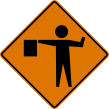
Flagger ahead
Standard MUTCD design · not an official government site
What it means
This sign warns that a person with a flag controls traffic through the work zone ahead, and it changes the chain of command on the road: the flagger's instructions override signs and signals for the duration. Flaggers are used where lane closures, pilot cars or short alternating one-way flows cannot be managed by markings alone. They hold a paddle or flag and use standard positions to order stops and releases. A flagger is a human being standing in live traffic, which is one more reason the reduced speeds in work zones exist.
How it gets misread
Drivers sometimes treat the flagger as advisory, holding only when it suits them, or assume that a lowered paddle means the closure is over. Another misread is watching the flagger and forgetting the queue of vehicles behind you.
What to do
Slow as you approach and obey the flagger's signals exactly as displayed, stopping where indicated and not creeping forward while held. When released, move through the controlled section steadily without stopping for photos or to look at the work. Expect the instructions to differ from what the static signs alone would suggest; the flagger sees the whole work zone and you do not.
Practise this rule
- Work Zones: Driving Past Workers Safely | CO
You enter a work zone where workers are standing beside the travel lane and the lanes have been narrowed. How should you drive?
More work zone signs
Sources
- Section referenced: Colorado Driver Handbook — Work Zones
- Colorado Driver Handbook, January 2025 (DR 2337) — English PDF · Spanish PDF
- Retrieved 2026-10-17 from Colorado Division of Motor Vehicles
The drawing above is an original illustration created for this site, based on the sign's published shape and colour conventions. It is not an official government reproduction.