Warning signs
Advisory curve speed
Standard MUTCD design · not an official government site
What it means
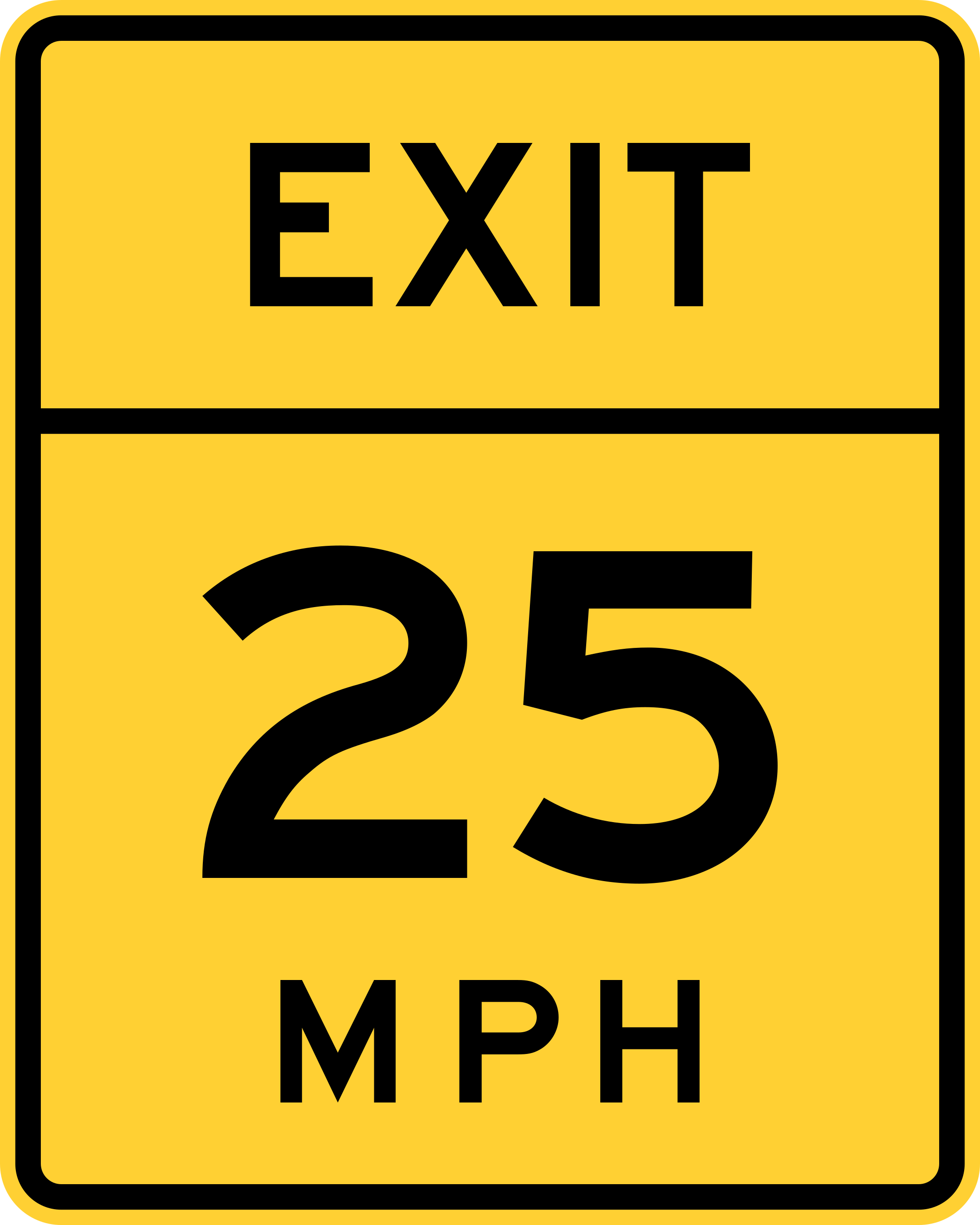
This pairing of a curve warning with a speed plaque gives you two separate pieces of information: the road bends ahead, and engineering study suggests a speed for the bend below which most vehicles can hold their lane comfortably in good conditions. The word advisory is the whole point. It is not a legal limit, and it is not calibrated to your specific tyres, load or the temperature of the surface; it is a well-tested general recommendation for the average vehicle on a dry road.
How it gets misread
The commonest misread is treating the plaque as the legal maximum and the diamond as decoration, or the reverse: ignoring the number because it is not enforceable. Both miss the point, which is that the bend punishes entry speed specifically, not speed in general.
What to do
Brake on the straight before the curve so you enter at or below the advisory figure, then keep your speed or let it fall gently through the bend. Do not accelerate hard mid-curve and do not brake there either; do the speed change before the bend starts. In rain, snow or with a loaded vehicle, treat the advisory as optimistic rather than exact.
Practise this rule
- Slow Down Before the Curve, Not Inside It
A sharp curve ahead carries an advisory speed plaque below the warning sign. When should you slow to that speed?
More warning signs
Sources
- Section referenced: Colorado Driver Handbook — Signs, Signals and Pavement Markings: Warning Signs
- Colorado Driver Handbook, January 2025 (DR 2337) — English PDF · Spanish PDF
- Retrieved 2026-10-17 from Colorado Division of Motor Vehicles
The drawing above is an original illustration created for this site, based on the sign's published shape and colour conventions. It is not an official government reproduction.