Regulatory signs
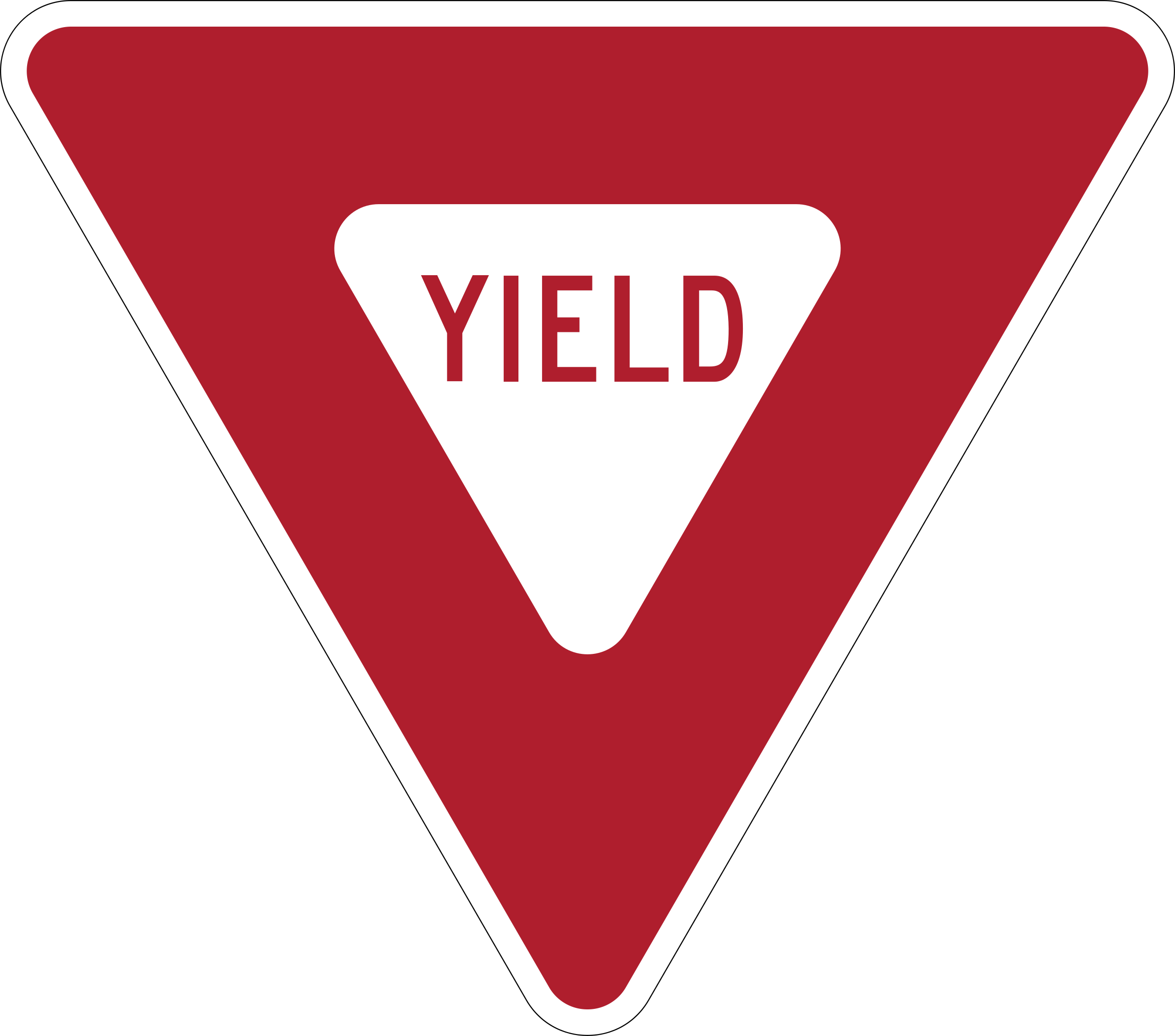
Yield
Standard MUTCD design · not an official government site
What it means
A yield sign assigns priority to traffic on the road you are entering or crossing. It does not order you to stop in every case; it orders you to give up the right of way whenever giving way is needed. In practice that means slowing enough to scan the road you are joining, judging whether anyone on it is close enough to be affected by you, and being prepared to stop completely if they are. The upside-down triangle shape is unique in the sign system precisely so that you recognise the instruction before you can even read the word.
How it gets misread
The classic misread is that yield means slow down a little and slide in. Another is the opposite error: treating it as an unconditional stop sign and halting when the road is completely empty. The sign asks for a judgement about other traffic, not a fixed speed or an automatic halt.
What to do
Slow as you approach, scan the road you are merging or crossing into, and hold back for every vehicle and pedestrian close enough that your entry would make them brake or swerve. If their path and timing would conflict with yours, stop completely and wait. If the way is genuinely clear, continue without stopping. If you cannot decide because your view is blocked, treat it as a stop until you can see.
Practise this rule
- Yield Signs: When Must You Stop | CO
Facing a yield sign, when is a driver actually required to come to a complete stop?
More regulatory signs
Sources
- Section referenced: Colorado Driver Handbook — Signs, Signals and Pavement Markings: Yield
- Colorado Driver Handbook, January 2025 (DR 2337) — English PDF · Spanish PDF
- Retrieved 2026-10-17 from Colorado Division of Motor Vehicles
The drawing above is an original illustration created for this site, based on the sign's published shape and colour conventions. It is not an official government reproduction.